
How Salt Air Affects HVAC Systems in Newport & Huntington Beach
March 6, 2026
If you live along the Balboa Peninsula or within a few blocks of the Huntington Beach Pier, you know that the “marine layer” is more than just a morning fog—it’s a way of life. That refreshing ocean breeze is why we live here. But while that salty air is great for the soul, it is arguably the single greatest threat to your home’s HVAC system.
In coastal Orange County, “Standard” HVAC maintenance isn’t enough. Here is everything Newport and Huntington Beach homeowners need to know about salt air corrosion, and how to prevent a $10,000 system failure.
The Science of “Salt Spray” Corrosion
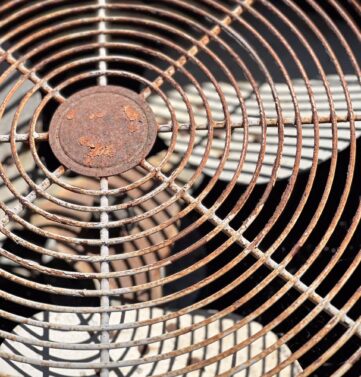
Most HVAC systems are designed with copper and aluminum. When salt-laden moisture from the Pacific hits these metals, it triggers a chemical reaction called electrolytic corrosion.
-
Pitting: Salt eats small holes into your aluminum fins and copper tubing.
-
Refrigerant Leaks: Once pitting occurs, refrigerant begins to leak. Because these holes are microscopic, they are notoriously difficult (and expensive) to find and repair.
-
Heat Transfer Loss: Corrosion creates a “crust” on your coils. This acts as an insulator, preventing your AC from releasing heat. Your system has to run twice as long to achieve the same cooling effect.
The “Salt-Zone” Breakdown: From the Peninsula to Central Park
In Orange County, we don’t just measure distance in miles; we measure it by the “marine layer” reach. While the salt air technically affects any home within five miles of the coast, the severity changes drastically depending on which side of PCH you call home.
The “Front Line”: Oceanfront & The Peninsula
If you’re living on Balboa Blvd, the Newport Peninsula, or right off PCH in Sunset Beach, your HVAC unit is essentially living in a salt bath. At this range, salt isn’t just a gas; it’s a physical spray. We’ve seen brand-new, unprotected condensers show signs of structural rust in as little as 24 months. For these “Front Line” homes, a standard annual check-up isn’t enough—you need quarterly “rinse-and-inspect” cycles to prevent the salt from “pitting” your coils.
The “Corrosion Corridor”: Huntington Harbour & Dover Shores
As we move slightly inland to areas like Huntington Harbour, Dover Shores, or the Mesa Verde area, the salt isn’t hitting your unit in waves, but it is constantly present in the morning fog. This “heavy mist” hangs on the aluminum fins of your AC, slowly eating away at the efficiency. Homeowners near Huntington State Beach often notice that their units work fine in the morning but struggle during the heat of the afternoon—this is usually because salt buildup is preventing the system from “breathing” properly.
The “High-Humidity Zone”: Eastbluff & Central HB
Once you get past Newport Heights or toward Huntington Central Park, the direct salt spray drops off, but the coastal humidity remains. Here, the primary threat is “sticky” debris. The salt in the air acts like a magnet for dust and pollen, creating a thick, grimy “sweater” over your coils. If you aren’t cleaning these units at least twice a year, your energy bills in these neighborhoods can jump by 20% to 30% simply because the system is suffocating.
Local Insight: We’ve found that units located on the windward side of a home (facing the ocean) in Corona del Mar tend to fail 3–4 years sooner than units tucked behind a windbreak or a courtyard wall. Location on your actual property matters just as much as your zip code!
Salt Air AC Corrosion Service in Newport Beach & Huntington Beach
Salt air corrosion is one of the most common reasons HVAC systems fail in coastal Orange County. Homes near Newport Beach, Huntington Beach, and surrounding oceanfront communities require specialized service to prevent long-term damage from salt exposure.
Our salt air AC corrosion service focuses on identifying early signs of deterioration, including coil pitting, electrical corrosion, and reduced cooling efficiency caused by salt buildup.
5 Coastal Maintenance Tips to Save Your System
To stay in that “top 3” tier of well-maintained homes (and to avoid a mid-August breakdown), follow this coastal checklist:
1. The “Freshwater Rinse”
Once a month, take a garden hose and gently rinse your outdoor condenser unit. Warning: Do not use a pressure washer; high pressure will bend the delicate aluminum fins. A gentle rinse removes the crystalline salt crust before it can eat through the metal.
2. Apply a Protective Coating
If you are installing a new unit in Newport Beach, ask about Bronz-Glow or ElectroFin coatings. These are factory-applied epoxy coatings that provide a barrier between the salt air and the raw metal. For existing units, professional technicians can apply “field coatings” to extend lifespan.
3. Change Filters Monthly
Coastal air is humid. Humid air makes dust “sticky,” which clogs your filters faster than in dry, inland areas like Riverside or Irvine. A clogged filter restricts airflow, forcing an already-corroded system to work even harder.
4. Clear the Landscaping
We love our coastal hibiscus and palms, but keep them at least 2–3 feet away from your unit. Plants trap moisture and salt spray against the cabinet, accelerating rust.
5. Invest in Stainless Steel Hardware
When we perform repairs in Huntington Beach, we often find the internal screws and brackets have rusted shut. Swapping standard steel hardware for stainless steel can prevent the cabinet from literally falling apart.
Salt-Air Resistant HVAC Systems and Corrosion Protection
Not all HVAC systems are built for coastal environments. Standard units can begin to show corrosion within just a few years when exposed to constant salt air.
That’s why we also work with corrosion-protected AC coils and salt-resistant HVAC system upgrades designed specifically for homes in Newport Beach and Huntington Beach. These systems use protective coatings and upgraded materials to slow down corrosion and extend equipment lifespan in harsh coastal conditions.
For homeowners in high-exposure areas like Newport Coast or Huntington Harbour, upgrading to a salt-air resistant system can significantly reduce long-term repair costs and improve efficiency.
Local technicians understand the marine layer’s impact. We know that a “weird humming noise” on a house near PCH often means the salt has corroded the electrical contactors or the fan motor bearings. We use specialized, non-acidic cleaners that dissolve salt without eating away the remaining metal on your coils.
Why Local Expertise Matters
You wouldn’t hire a desert contractor to fix a boat, and you shouldn’t hire an inland HVAC company to service a Newport Beach home.
Local technicians understand the marine layer’s impact. We know that a “weird humming noise” on a house near PCH often means the salt has corroded the electrical contactors or the fan motor bearings. We use specialized, non-acidic cleaners that dissolve salt without eating away the remaining metal on your coils.
The Ultimate Coastal Defense: The Varitek Comfort Plan
In a beach town, HVAC maintenance isn’t a luxury—it’s an insurance policy. Standard “one-size-fits-all” service plans often miss the specific nuances of salt-air degradation. That’s why we developed the Varitek Comfort Plan, a specialized maintenance program engineered specifically for the unique climate of Newport Beach and Huntington Beach.
While other companies might just “check the levels,” our Comfort Plan is a proactive strike against the Pacific’s corrosive elements.
Why the Varitek Comfort Plan is Different:
-
Salt-Neutralizing Coil Washes: We don’t just rinse with water; we use specialized, non-acidic foaming cleansers designed to break the molecular bond between salt crystals and your aluminum fins.
-
Precision Electrical Tightening: Salt air accelerates “arcing” in electrical components. We inspect and tighten every connection to prevent the common “burnt-out capacitor” calls we see every July in Corona del Mar.
-
Priority “Beach-Front” Scheduling: When the heat hits PCH, our phones ring off the hook. As a Comfort Plan member, you jump to the front of the line. We guarantee faster response times for our local members.
-
Loyalty “Salt-Shield” Discounts: If the salt air finally wins and you need a part replacement, our members receive significant discounts on high-grade, corrosion-resistant components.
The Cost of Neglect vs. The Value of Protection
The average AC replacement in a coastal zip code can cost upwards of $10,000–$15,000 due to the high-end equipment required for our environment. The Varitek Comfort Plan costs a fraction of that and is proven to extend the life of your system by 30% to 50%.
Whether you’re overlooking the water at Crystal Cove or nestled in Huntington Harbour, your HVAC system is an investment. The Varitek Comfort Plan is how you protect it.
Don’t Let the Salt Air Steal Your Comfort
If you live in Newport Beach, Huntington Beach, or Corona del Mar, your HVAC system is fighting a 24/7 battle against the elements. A small amount of salt today becomes a massive repair bill tomorrow.
Whether you’re near the Huntington Beach Pier or over in Eastbluff, Varitek is your local coastal specialist. We don’t just fix air conditioners; we protect them from the unique OC climate.
Get Your Coastal System Diagnostic Today!
Stop wondering if the salt is eating your coils. Join the Varitek Comfort Plan and get the peace of mind that comes with expert, ocean-ready maintenance.
-
Call us directly: (562) 365-3560